Somnath Nirmal / Navnath More
FOLLOWING the vigorous and victorious July student struggle at Jantar Mantar in Delhi, the movement by Adivasi students in Maharashtra in August 2026 once again brought issues of education and employment, especially of the socially oppressed, to the forefront. Given the intensity of the 17-day long agitation, the state government was forced to bow down.
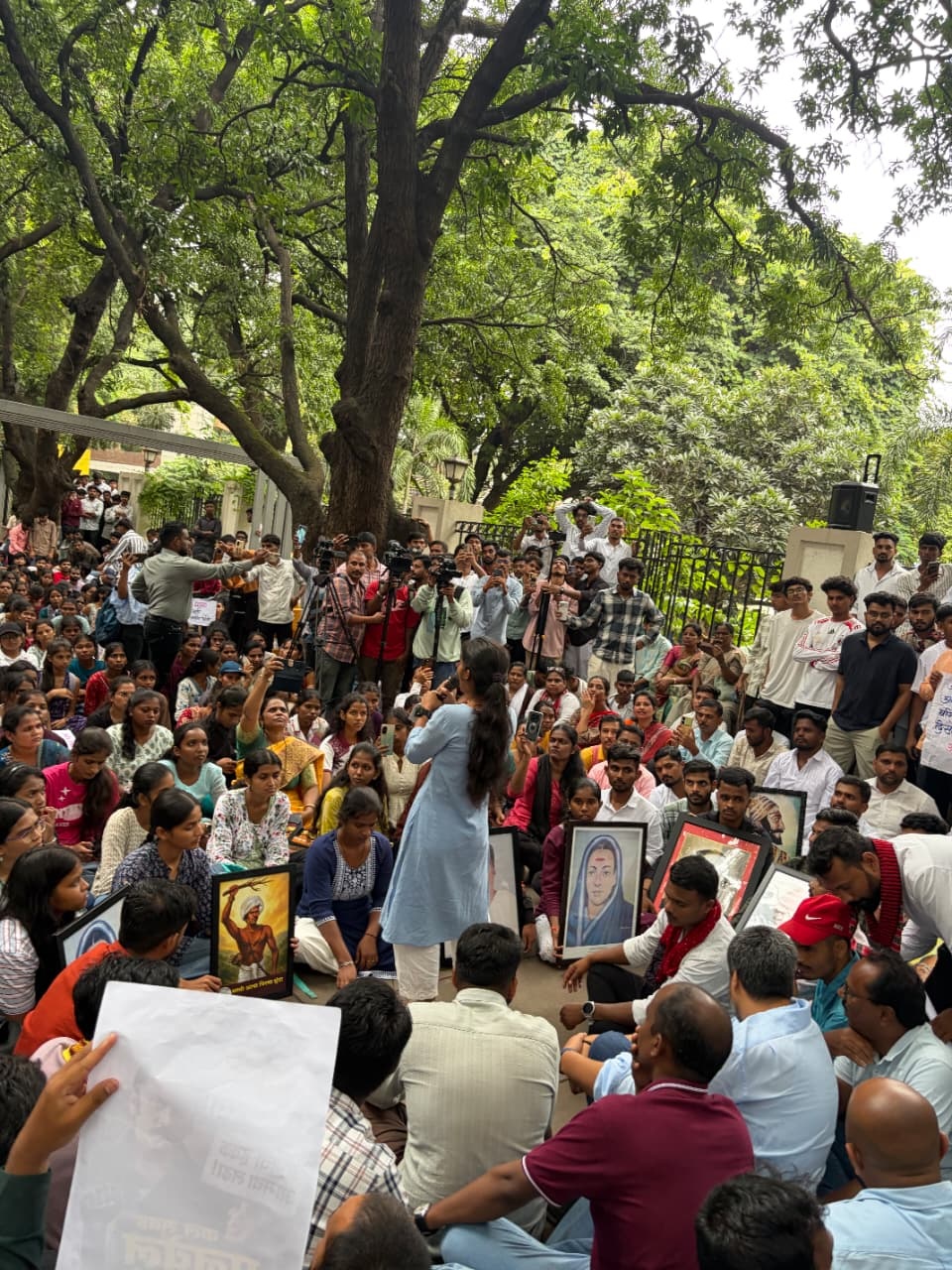
Adivasi students staged powerful protests in cities such as Pune, Nashik, Nagpur, Nandurbar, Amravati, Thane, Palghar, Nanded and Yavatmal. The Students’ Federation of India (SFI) actively participated in this joint movement. Independent marches were organised under SFI leadership in several places across Maharashtra, including Dahanu, Shahapur, Nandurbar, Ghodegaon, Junnar and Ambajogai. They mobilised thousands of students, girls and boys.
DEMANDS OF THE STRUGGLE
The agitation against the Government Resolutions (GRs) issued by the Maharashtra state government on August 5, 2026 and August 14, 2026, concerning Adivasi hostels were strongly opposed by the students. They brought several long-pending issues and demands to the centre of attention, including those related to Adivasi Ashram Schools, Adivasi students’ hostels, and other burning issues related to education and employment. One of the major demands of this struggle was the withdrawal of the GRs dated August 5 and August 14, 2026.
The August 5, 2026 GR had set the maximum age limit for students seeking admission to hostels at 26 years. It also introduced restrictive and unconstitutional provisions stating that students should give a written undertaking not to participate in any protests. The August 14, 2026 GR increased the age limit to 30 years. However, the students remained firm in their demand that the government should withdraw both the GRs in their entirety.
Among the other important demands were updating the GR dated November 11, 2011, and increasing the benefits under it as per the inflation index; taking student representatives into confidence before taking any major decisions; removing the age limit for admission; and establishing government hostels at the district level in central locations within cities.
The protesters also demanded that compensation be fixed at Rs 1 crore in the event of the death of a student from a tribal residential school or hostel due to any unfortunate incident, Rs 50 lakh in case of permanent disability, and Rs 25 lakh in case of injury. They further demanded that the 95,000 posts allegedly occupied by bogus beneficiaries at the expense of genuine tribal candidates be given back to tribals, and that, in accordance with the Supreme Court judgment, recruitment to 12,500 posts be carried out immediately.
Another demand was to discontinue the Direct Benefit Transfer (DBT) scheme at the district level and introduce a proper system for meals as per the system in hostels run by the Social Welfare Department. They also called for the cancellation of the Central Kitchen system. They demanded that anti-snakebite vaccines be made available in residential schools and hostels and that effective measures be taken to ensure students receive prompt medical treatment.
They demanded that employees who had been recruited through the PESA recruitment process but were subsequently removed from service must be reinstated. In addition, they demanded that tribal young men and women who have achieved outstanding performance at the national or international level in various fields, including Mount Everest expeditions, be honoured and inducted into government service. There were some other demands as well.
UNRESPONSIVE GOVERNMENT
The first meeting between the students and the Tribal Development Minister Ashok Uike and Food and Drugs Administration Minister Narhari Zirwal was held in Mumbai on August 18 and 19. Despite four rounds of discussions over two days, no concrete decision was reached.
Before agreeing to meet the delegation, Chief Minister Devendra Fadnavis allegedly imposed a strange condition. He stated that he would hold discussions with the delegation only if the protesters gave a written assurance that they would withdraw the agitation after the talks. In view of this ridiculous condition, the students announced that they would not hold discussions with the Chief Minister and returned to the protest sites. SFI State Vice-President Navnath More and Balkrishna Gawari were present during these discussions.
Even after the meetings with the state government, no solution was reached. Therefore, at the “Chhatron Ki Goonj” programme in Pune of the Leader of the Opposition Rahul Gandhi on August 22, SFI State Joint Secretary Nisha Sabale fearlessly raised the issues faced by Adivasi students. Following this, the movement received widespread attention not only across the state but also at the national level. The media strongly highlighted the issue, and the movement grew into a broader agitation, with protests being organised in various districts across the state under the leadership of different organisations and students at large.
AGITATION INTENSIFIES
On August 23, a massive march was held in Pune, with the participation of thousands of Adivasi students. Students staying in hostels in Pune city, as well as students from surrounding areas, joined the march. Along with the SFI, several other organisations also played an active role. At Manjari, SFI activist Nikita Mechkar was among those who personally sat on fast.
The students organised a long march in Vidarbha region from Amravati to the residence of the Tribal Development Minister in Yavatmal. Due to the rising intensity of the agitation, the Minister intervened midway through the long march and held discussions with the students.
During this period, opposition legislators – MLA Comrade Vinod Nikole, MLA Rohit Pawar, MLA Kiran Lahamte, MP Gopal Padvi, former MLA Sunil Bhusara, former MLC Kapil Patil, and former MLA Yashomati Thakur visited and supported the students hunger strike at Manjari in Pune. The Nashik and Nagpur stirs were visited by other elected representatives. These visits by opposition leaders increased the political pressure on the state government.
Finally, as public pressure mounted across the state, on August 29, a student delegation held a meeting with Chief Minister Devendra Fadnavis and Minister for Tribal Development Ashok Uike. The discussions were positive, and as a result of consistent struggle, the government was compelled to accept some of the students’ demands.
One of the important demands won was the cancellation of GRs dated August 5 and August 14, 2026, concerning hostels. A new GR was issued cancelling the DBT for meals in district hostels and restarting of proper fresh meals was issued. The Tribal Development Department also issued a decision regarding the submission of an Action Taken Report in connection with Adivasi Ashram Schools. In addition, it was agreed to formulate a time-bound programme for the recruitment of 12,500 posts and complete the recruitment within six months.
The state and district leadership of the SFI actively participated in and led various agitations across the state. They included State Secretary Somnath Nirmal, State President Rohidas Jadhav, State Vice-Presidents Navnath More, Bhaskar Mhase and Manisha Ballal, State Joint Secretaries Nisha Sabale, Ashok Sherkar and Meena Arse, State Secretariat members Sandeep Marbhal and Geeta Dauda, as well as several other state committee members and activists.


