Ashok Dhawale
At the call of the 5,000-strong National Convention of Workers and Farmers organised jointly by the Central Trade Unions (CTU) and the Samyukta Kisan Morcha (SKM) on July 29, 2026, and the 1,200-strong SKM National Convention held a day earlier on July 28, both in Delhi, lakhs of workers and peasants across the country enthusiastically participated in the massive struggle on August 10, 2026, against the disastrous policies of the Modi-led RSS-BJP government. These actions commemorated the ‘Quit India’ movement.
MASSIVE RESPONSE
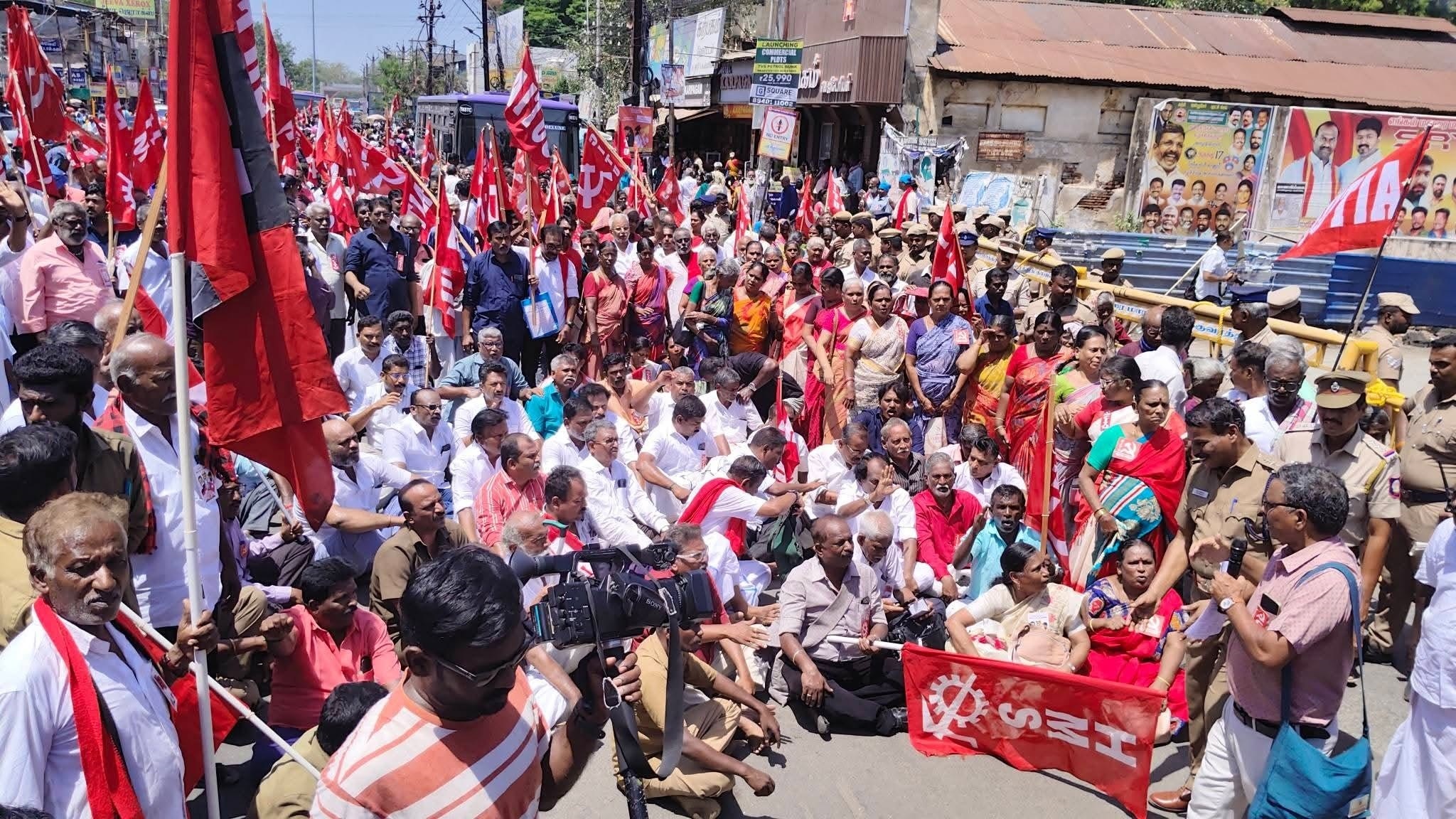
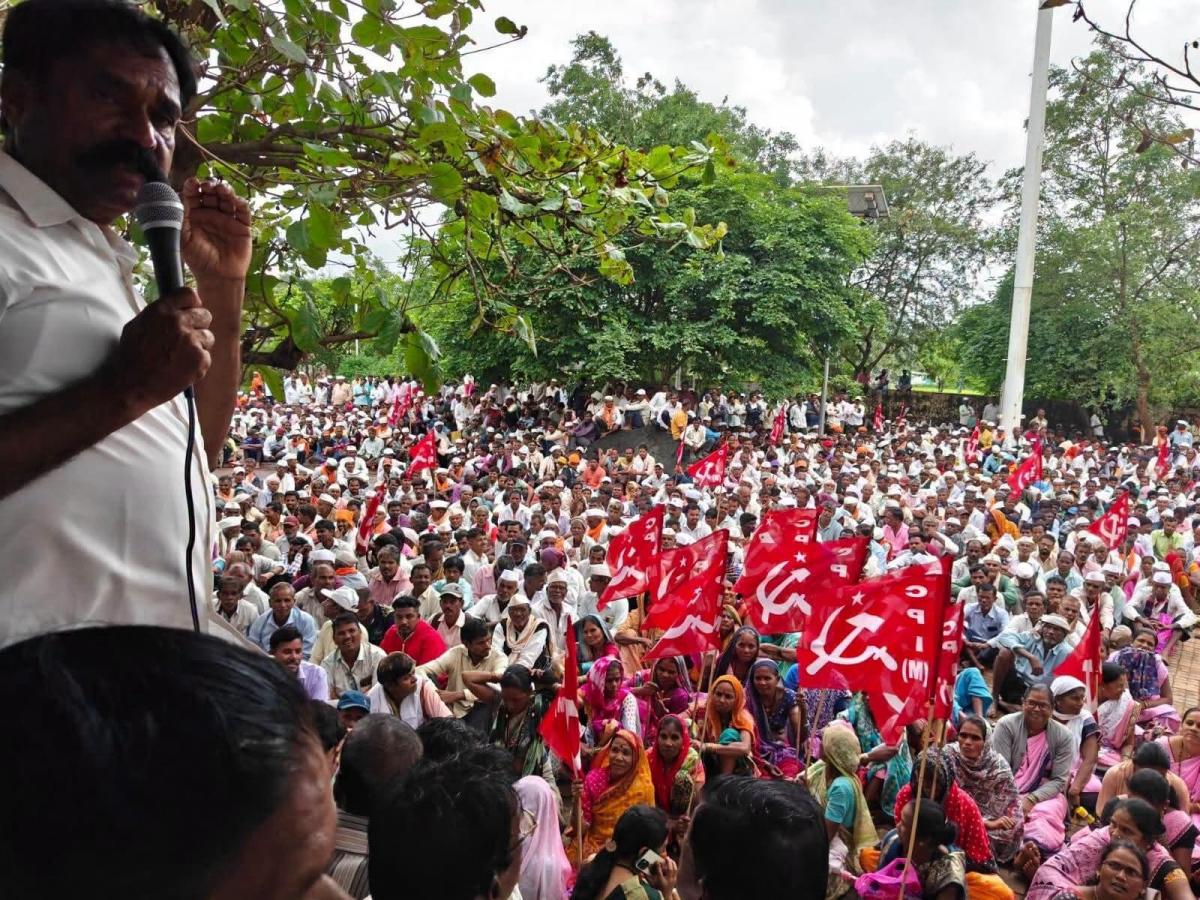
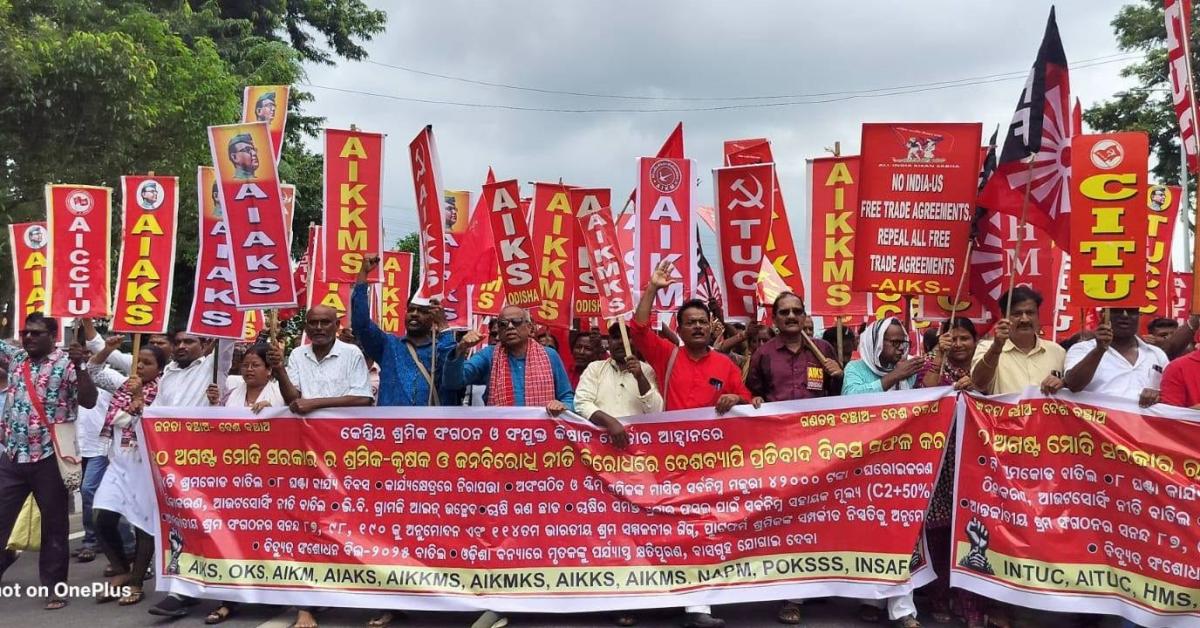
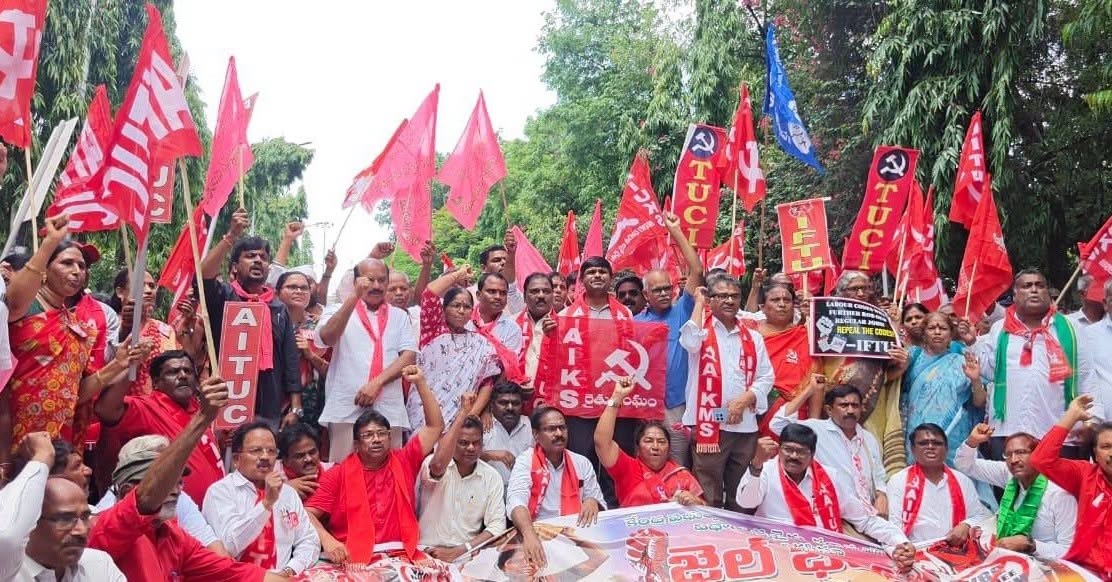
The August 10 actions took myriad forms of jail bharo, road blockade, chakka jaam, gherao of government offices, rallies, demonstrations and dharnas. Along with workers, peasants and agricultural labourers, women, youth and students hailing from all religions, castes and regions thronged these massive protests. They attacked the abysmal failure of the anti-people, pro-corporate, communal, manuwadi, corrupt, and fascistic Modi regime on all fronts. The response of the people across the country was so overwhelming that the administration in hundreds of places had to plead its inability to arrest so many people and throw them in jail.
As per the detailed state wise information collected by the All India Centres of the three class organisations, the total mobilisation of the CITU, AIKS, and AIAWU in the nationwide Jail Bharo action on August 10, 2026, was 6,14,005, at innumerable centres in over 400 districts in 26 states and union territories. The accompanying chart gives the state wise mobilisation figures collected from across the country.
These figures show that the CITU share in the countrywide actions was 3,00,977, the AIKS share was 2,22,624, and the AIAWU share was 90,404. Thousands more owing allegiance to the AIDWA, DYFI, and SFI took part. The enthusiasm in these actions was infectious.
Taking the state wise picture of the above three class fronts, West Bengal was clearly in the lead with a total mobilisation of 1,99,896. After a big difference, Maharashtra was second with 66,054; Telangana was third with 60,822; Tamilnadu was fourth with 37,551; Tripura was fifth with 35,852; Bihar was sixth with 34,437; and Keralam was seventh with 28,405.
Other trade unions and farmers bodies which are part of the CTU and the SKM also took part in various states in large numbers. The details of their participation are being collected.
After the historic 36-day long Jantar Mantar student-youth struggle which came to a head on July 20-25, the August 10 nationwide struggle of the working class and the peasantry succeeded in further galvanising the country against the Modi-led BJP-RSS regime.
MAIN ISSUES OF STRUGGLE
The main national issues which were highlighted in the protests were as follows. Along with these, several state and local-level burning issues were also highlighted.
1. No India-US Free Trade Agreement; Repeal all earlier Free Trade Agreements.
2. Enact Law for MSP@C2+50% with guaranteed procurement for all crops.
3. Comprehensive Loan Waiver to end rural indebtedness and peasant-worker suicides; Rs 25 lakh compensation to each suicide victim family.
4. Scrap the four Labour Codes and ensure minimum wage of Rs 42,000 payable to all workers.
5. Scrap the bogus VB GRAMG Act, restore MGNREGA, ensure 200 days of work per year and Rs 700 per day as wages. Food, education, employment, health, and housing to all.
6. Withdraw Electricity Privatisation Bill 2025, Seed Bill 2025, the National Food Security Act (NFSA) Amendment Bill, and the New Pension Scheme. Restore the Old Pension Scheme.
7. No forced land acquisition, no pro-corporate land pooling, protect land rights based on LARR Act 2013, Forest Rights Act (FRA) 2006 of tribal and non-tribal forest-dwellers.
8. Withdraw draconian Acts like UAPA, NSA, sedition, and such other provisions in the BNS.
9. Impose wealth tax, raise corporate tax and income tax on the super-rich to help the poor.
‘QUIT INDIA’ MOVEMENT – THEN AND NOW
Eighty-four years ago, from the August Kranti Maidan in Mumbai on August 8, 1942, Mahatma Gandhi gave the ultimatum to the hated British imperialist rule to ‘Quit India’. He also called upon the people of India to join this struggle in a big way with the slogan, ‘Do or Die’, or ‘Karenge ya Marenge’. From August 9, a huge nationwide uprising began which continued intensively for over three months, and in various forms for over three years.
Historical records estimate that in the Quit India movement, well over 1,000 people were killed in police or military firing, more than 3,000 were injured, and over 90,000 people were detained for long periods of time, including the national leadership of the struggle.
The savage repression unleashed by the police of the RSS-BJP’s Modi-Shah regime on thousands of students and youth, including hundreds of girl students and young women, in the nation’s capital Delhi on the opening day of Parliament’s monsoon session on July 20, 2026, tragically took the country back to the terrible days of British colonial rule. Lathis, rods, tear-gas, water cannons, shock batons, pellet guns, and even AK-47 rifles used to gun down terrorists – no weapons were spared by the bloodthirsty rulers!
The same repression which was launched by the RSS-BJP regime and its armed personnel in Delhi was repeated in RSS-BJP-ruled states of Bihar, Uttar Pradesh, Bengal, Assam, Gujarat, Maharashtra, Madhya Pradesh, and even in the Congress-ruled state of Kerala!
The Gen-Z, not only in Delhi, but in over 100 cities and towns across the country, fought this state repression head on and, after a 36-day struggle, won a famous victory over the Modi-Shah-led dictatorial regime on July 25. Education Minister Dharmendra Pradhan was forced to resign. The novel student-youth struggle was centered on their legitimate issues of examinations, education, and employment. All three sectors are in deep crisis today.
OVERALL CRISIS
The National Education Policy (NEP) 2020 has greatly accelerated the commercialisation, corporatisation, communalisation, centralisation and corruption of education, throwing it out of reach of crores of poor urban and rural families. Dalits, Adivasis, Backwards, minorities, and girls are obviously the worst hit. Around 152 examination question papers have been leaked in the last 10 years, to the great detriment of lakhs of students and their parents.
Unemployment is unprecedented. However, there are almost 50 lakh sanctioned posts lying vacant in various government departments. Over 90% of India's workers are employed in the informal sector, without formal contracts, pensions, or social security benefits. Women account for less than one-third of India's labour force, despite making up nearly half the population.
As a matter of fact, it is not only examinations, education, and employment, but all other major sectors in India which are in deep crisis today. They include the economy, agriculture, industry, irrigation, electricity, nutrition, health, foreign trade, and even foreign policy. This crisis has been aggravated by the RSS-BJP government’s policies over the last 12 years.
Further, in these last dozen years, the Modi regime has constantly attacked the productive classes – workers, peasants, agricultural/rural workers, the socially oppressed – dalits, adivasis, minorities, and women - and also students and youth, with a vengeance. On the other hand, it has fattened all its corporate cronies like the Adanis and Ambanis beyond measure. It has surrendered to US imperialism led by Donald Trump and Israeli Zionism led by Benjamin Netyanahu in every area, to the great detriment of our national interest.
STARK INEQUALITIES
The level of socio-economic inequality in India is stunning, and it is constantly growing. As per the recent Survey done by Oxfam International for 2023, 1 per cent of the richest Indians owned 40.1 per cent of all the wealth, and 10 per cent of the richest Indians owned 77.4 per cent of all the wealth in our country. On the other hand, the wealth owned by the bottom 60 per cent was only 4.8 per cent.
As per the Forbes data, the number of Indian billionaires in 1991, when the neoliberal policies began, was only 1, with a wealth of 1-2 billion US dollars. In 2025, their number rose to 205, with a combined wealth of 941 billion US dollars, which is nearly 1 trillion! The wealth of the top 9 billionaires is equal to the wealth of the bottom 50 per cent of Indians!
According to the World Inequality Lab, the concentration of wealth in the top 1 per cent of Indians is at its highest level in over six decades, exceeding levels recorded during the entire post-independence period. The present Indian economy has been described by economic experts as "more unequal than the British colonial Raj" in terms of top income concentration.
Some social inequality indicators are equally stark. According to the National Family Health Survey (NFHS-5), 35.5 per cent of children under 5 years are stunted, reflecting chronic undernutrition. Anaemia among women (15–49 years) is 57 per cent; among children (6–59 months) it is 67.1 per cent; and among men (15–49 years) it is 25 per cent. About 6.3 crore Indians are pushed into poverty every year because of out-of-pocket healthcare expenses.
POLITICAL CHALLENGES
While taking up all these socio-economic issues in the extensive and intensive campaign leading up to the August 10 protests, political issues were also naturally taken up. They included the thoroughly immoral acts of the RSS-BJP regime of the corrupt splitting up of political parties like the Shiv Sena, NCP, AAP, and TMC; buying up their MPs and MLAs wholesale through threats and blandishments; the misuse of Central agencies like the CBI, ED, and IT; the authoritarian drive marked by the subjugation of the Election Commission, the SIR exercise, and the delimitation conspiracy; the communal and casteist poison of the RSS-BJP; and the defence of national sovereignty, democracy, secularism, and social justice.


