‘We Will Continue to Fight!’ – Meet the Girl Activists Fighting Against SIR
The struggle against Special Intensive Revision (SIR) has brought to the forefront not only questions concerning people's democratic and constitutional rights, but also the disturbing experiences of intimidation, harassment and abuse faced by those who have come forward to resist it. Among the most disturbing aspects of this struggle are the experiences of young girls who were subjected to abuse, humiliation and harassment, including sexual harassment in the course of their participation in, or association with, the movement. Their experiences reveal how vulnerable women and girls become targets when they assert their rights and raise their voices against injustice.
The interviews that follow give these young girls an opportunity to speak in their own words about what they went through, the circumstances in which the abuse took place, its impact on their lives and families, and the courage it took to come forward and share their experiences. These are not merely individual stories of pain and trauma. They are testimonies that expose the gendered dimensions of repression and the attempts to silence dissent through fear, humiliation and violence. At the same time, they reflect the resilience and courage of young women who refuse to be silenced. Their voices deserve to be heard with sensitivity and seriousness. Their experiences demand accountability, justice and solidarity, and reaffirm the need to defend the democratic space in which every person, particularly women and girls, can raise their voice without fear.
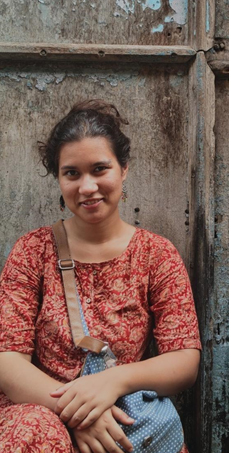
Nadia (SFI Delhi State President)
1. What inspired you to join the movement against SIR and Gyanesh Kumar?
I am inspired to join the protests because I want to be a citizen of this country! SIR is being implemented in a horribly incompetent way, leaving out one third of citizens in just Delhi alone. In Bengal, many voters were removed from the voters list and immediately put back after the elections! This is the worst threat that Indian Democracy has faced in its history.
2. As a woman activist, how would you describe your experience of participating in the SIR protests in Delhi? What challenges did you face?
It has been hard. The threat comes from the Delhi police as well as RSS activists. The police are using physical violence and tactics of sexual humiliation. At the same time, since Jantar Mantar, any woman whose video starts to make the rounds on the internet are trolled endlessly. It starts with sexually vulgar comments. Every single SFI activist who has a video of theirs shared will have 10-15 comments calling them prostitutes, or something along the lines of ‘300 Rs me bikne wali’. Depending on the identity of the woman, it can take nastier turns. I am subjected to Islamophobic comments. Having Jai Bhim in our bio would result in ‘neelchatti’ comments. But, the faces of the protests, both for the resignation of Gyanesh Kumar and the Jantar Mantar protests against Dharmendra Pradhan, are women. Mainly because the Left has a huge role to play in both these movements. The broader Left is the only political force where women (and other minorities) play an equal role in leadership.
3. What insights or lessons have you gained from being part of this movement, both as an activist and as a woman?
As an activist I have learned about the importance of understanding the masses. As a woman, I have learned how being assertive and brave are not only important, but also essential.
4. Will you continue to protest despite the repression that you faced and if so, why?
Of course! We HAVE to continue to protest! The repression shows the government is scared, and in a weak position. Stopping right now would be agreeing with the fear tactics of the government. The repression we faced is not a grave injustice done on us; it is a consequence of a grave injustice being done by BJP on the whole country. We MUST continue.
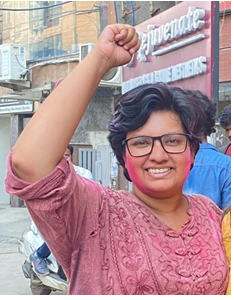
Mehina Fathima (SFI Delhi Joint Secretary)
1. What inspired you to join the movement against SIR and Gyanesh Kumar?
Since childhood, we have been taught in all social studies classes that "Every Indian citizen has one vote as their right". In 2026, when we hear that more than 13 crore Indians have been looted of their right to vote, by their own state, it becomes clear to us that this is the time to fight and give it our all. We, as students of this country, can’t stand by and watch when our country is being stolen from the hands of its own citizens.
2. As a woman activist, how would you describe your experience of participating in the SIR protests in Delhi? What challenges did you face?
The experience was harrowing but it has not weakened our spirits one bit. I was dragged, slapped and thrashed by the Delhi police on the streets of Connaught Place and taken in unlit bus at night all over Delhi, while being constantly threatened and intimidated by male police officers. A lot of my female comrades have faced sexual harassment at the hands of Delhi Police. We know that the state is using gendered violence against us to get women off the streets and to weaken the movement. We will not bow down to their dirty tactics.
3. What insights or lessons have you gained from being part of this movement, both as an activist and as a woman?
I have learnt both good lessons and bad. I have learnt that the neo-fascist state, if threatened, can go to any lengths to suppress its own citizens and that we should be prepared for the worst when fighting for justice and democracy. I have also seen with my own eyes, the physical manifestation of the slogan "the people united will always be victorious". Across weeks, from all corners of Delhi, people were coming out in hundreds to protest against the corrupt ECI. The 40,000+ force deployed by the state, watched helplessly as we took over the streets fighting for our rights. If that is not hope, I don’t know what is...
4. Will you continue to protest despite the repression that you faced and if so, why?
Without an ounce of doubt on my mind. Not just me, all my comrades are firm on the resolution that we will take this fight forward. Until all Indian citizens have gotten their right to vote restored...until the corrupt ECI is held accountable...until the traitor Gyanesh Kumar is sacked for good! We will fight. We will win.
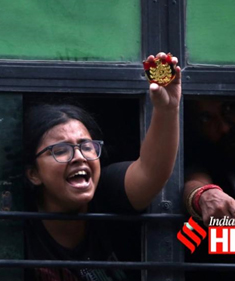
Simran (SFI Delhi Vice President)
1. What inspired you to join the movement against SIR and Gyanesh Kumar?
I joined the movement against Gyanesh Kumar (CEC) and SIR because more than 13 crore names from voter list have been deleted by the Election Commission at the behest of CEC who was working like a sycophant for BJP-RSS government while undermining the right of a free and fair elections of all citizens of this country. He needs to step down or thrown out and SIR needs to be rolled back. Democracy can't be compromised like this.
2. As a woman activist, how would you describe your experience of participating in the SIR protests in Delhi? What challenges did you face?
I have gotten detained thrice. In all those protests, I was illegally manhandled by the police to the point that I had bruises all over my arms and thighs. As a woman also, police use cheap tactics of resorting to sexual harassment and beating us and using misogynistic slurs at us. For example, one of the police women told one of my fellow protesters that "girls like you come here to get raped". As shocking as this sounds, imagine how it must have felt in the moment when 6 women police officers were beating just 2 women protesters in a bus for 20 mins straight while saying things like this. Not just police, there were RSS goons at Connaught Place beating women protesters too. It was horrific to witness. As women, we are at risk of all kinds of violence that can come from any side during these protests: police, RSS goons, some anti-social elements who join protests to harass women, it really is very difficult to feel safe. But the cause is bigger, which requires us all to be on the streets. And if we forego this chance of resistance then we lose out on change.
3. What insights or lessons have you gained from being part of this movement, both as an activist and as a woman?
The biggest realisation for me has been the hope these protests give to the entire country. BJP-RSS' repression raj is coming to an end and student protesters and organizations like SFI are leading it. Women are leading it. The movement is bound to be successful.
4. Will you continue to protest despite the repression that you faced and if so, why?
Yes, I will keep protesting till Gyanesh Kumar is thrown out and S.I.R is rolled back.
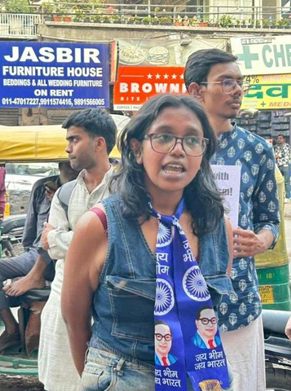
Ursula (SFI Delhi State Committee Member)
1. What inspired you to join the movement against SIR and Gyanesh Kumar?
As a school student I had seen the movement against CAA-NRC and the Shaheen Bagh protests on television. I had read that it was the longest protest gathering that was sustained by the women of the community. SIR also poses similar threats as CAA-NRC, and it is a direct attack on our citizenship. When the news of CEC's abuse of his authority came to light, as an activist of SFI, it was a natural response to join the movement.
2. As a woman activist, how would you describe your experience of participating in the SIR protests in Delhi? What challenges did you face?
Mostly the challenges have been because of the police. Delhi Police has employed horrific methods to target, discourage and abuse female protestors. This includes physical violence, illegal detentions and moral policing.
3. What insights or lessons have you gained from being part of this movement, both as an activist and as a woman?
I have learnt that the youth of the country is not afraid of protests or detentions anymore. This movement has normalised a lot of aspects of activism that were considered dangerous previously. We have also been made aware of our legal rights such as - right to personal liberty, how to handle detentions and illegal searches, etc.
4. Will you continue to protest despite the repression that you faced and if so, why?
Yes definitely. This isn't the first time activists have faced state repression and evidently, it won't be the last. Our motivation has always been to uphold the Constitution's values, and we will deal with all attempts of repression with it.


